Uganda officially promulgated its 1995 Constitution on October 8, 1995, following years of consultations and political debate aimed at establishing a new legal and political framework after decades of instability.
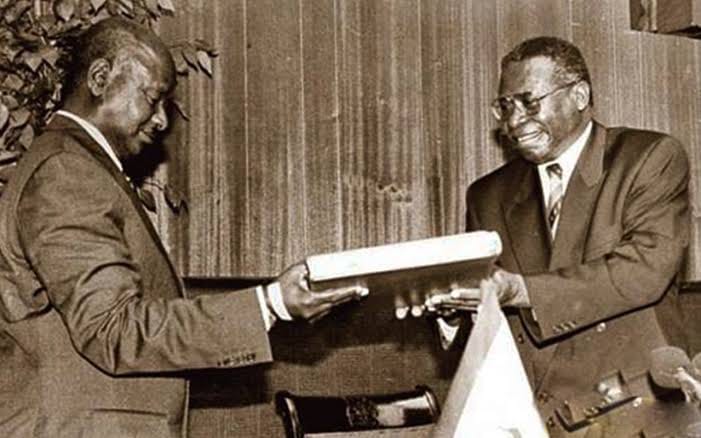
The ceremony took place at the Nile Hotel International Conference Centre in Kampala, where Constituent Assembly Chairman James Wapakhabulo presented the newly enacted Constitution to President Yoweri Museveni, who signed the instrument of promulgation.
The new supreme law repealed the 1967 Constitution and marked a defining moment in Uganda’s post-independence political history, one day before the country celebrated its 33rd Independence Day anniversary.
The Constitution was the culmination of a process that began in 1988, when the Uganda Constitutional Commission, chaired by Justice Benjamin Odoki, embarked on nationwide consultations to gather citizens’ views on the country’s future governance. Its findings informed the draft debated by the 284-member Constituent Assembly, which sat between 1994 and 1995 under Wapakhabulo’s chairmanship.
The assembly became the centre of intense debate over Uganda’s political system, the distribution of power and the protection of individual rights. One of the most contentious questions was whether the country should adopt a multi-party system or retain the National Resistance Movement’s Movement system, which its supporters defended as a means of preventing sectarian politics.
The resulting framework restricted political party activities, leaving the question of Uganda’s political system to future debate.
Delegates also argued over federalism, particularly demands for Federo, which was strongly championed by Buganda representatives. The assembly rejected a fully federal arrangement in favour of decentralisation through local government structures, while the Constitution provided for regional cooperation under specified conditions.
The final document established the supremacy of the Constitution, set out fundamental rights and freedoms, and defined the roles of the Executive, Parliament and Judiciary. It also introduced presidential term limits, subjected certain executive appointments to parliamentary approval and provided for affirmative action to improve the representation of women and other groups in public institutions.
Land ownership was another major issue. Article 237 vested land in the citizens of Uganda and recognised customary, mailo, freehold and leasehold tenure systems, providing a constitutional framework for addressing competing claims involving landlords and occupants.
Although the 1995 Constitution established a new foundation for governance, several of its provisions would become subjects of further political contestation and amendment. Presidential term limits, for example, were removed in 2005, while the Movement system gave way to the restoration of multi-party politics following a 2005 referendum.
The promulgation on October 8, 1995, therefore marked both the conclusion of an extensive constitution-making process and the beginning of a new chapter in Uganda’s continuing debate over democracy, accountability and the exercise of political power.