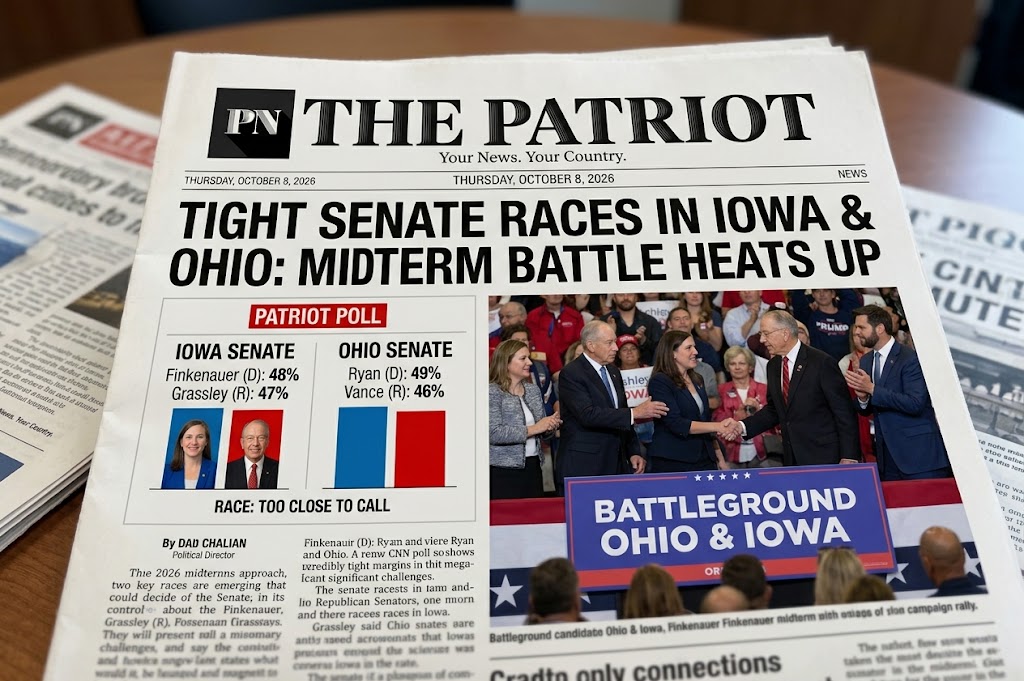
As the 2026 midterm campaign enters its critical final weeks, control of the United States Senate remains balanced on a razor's edge. While national attention frequently centers on traditional presidential battlegrounds, political analysts and pollsters are increasingly turning their focus to two Midwestern heartland states: Iowa and Ohio.
Once viewed as comfortable territory for Republicans, recent nonpartisan surveys show both states narrowing into genuine toss-ups—a development that could drastically alter party strategies in the scramble for an upper-chamber majority.
1. Iowa: A Heartland Open Seat Comes Into Play
Following the retirement of Republican Senator Joni Ernst, Iowa is holding its first open Senate race in years. What initially looked like an easy hold for national Republicans has turned into a tight, competitive contest between GOP Nominee Ashley Hinson and Democratic State Representative Josh Turek.
Key Factors Driving the Closing Margin
- Agricultural Economy & Cost Pressures: In rural precincts, volatile commodity prices and lingering supply-chain tariffs have created economic headwinds, leading some agricultural communities to scrutinize federal trade policy.
- Suburban Shifts: Fast-growing suburban communities around Des Moines, Cedar Rapids, and Iowa City continue to show strong Democratic organization, particularly around issues like healthcare, reproductive freedom, and education spending.
- Candidate Dynamics: Turek, a paralympian and state legislator, has pitched a non-traditional moderate platform aimed directly at independent and ticket-splitting voters, challenging Hinson's conservative momentum.
2. Ohio: A Rust Belt Crucible
In Ohio, former Democratic Senator Sherrod Brown faces Republican Jon Husted in a high-stakes clash that highlights the state's shifting political identity.
Why Ohio Remains a Essential Target
- Working-Class Economic Messaging: Manufacturing corridors and industrial towns across northern and eastern Ohio remain intensely focused on inflation, domestic energy policy, and job growth.
- Heavy Campaign Spending: Both national parties and independent PACs have poured tens of millions of dollars into Ohio radio, television, and digital markets, making it one of the most heavily advertised states in the country.
- High Turnout Expectations: Record-setting early voting numbers in suburban counties surrounding Columbus, Cleveland, and Cincinnati suggest that mobilization efforts on both sides are operating at full capacity.
3. The Polling Pitfall: Understanding Midwestern Data
While recent polling averages show near-ties or slight Democratic edges in both states, quantitative analysts urge caution when reading raw head-to-head surveys.
Midwestern Polling Dynamics & Historical Patterns
───────────────────────────────────────────────────────────
Historical Pattern: Midwestern polls have periodically
under-counted GOP turnout in rural
and exurban precincts.
Analytical Caution: Even with narrow leads or ties in late
autumn surveys, a typical polling margin
of error could preserve the GOP firewall.
Critical Takeaways for Election Watchers:
- Rural Turnout Factors: Rural voter participation in non-presidential midterm years often decides Midwestern contests. A late surge in low-density counties can quickly overcome thin suburban polling margins.
- The "Polling Bias" Precedent: In several recent election cycles across the industrial Midwest, late-season polls slightly underestimated conservative turnout on Election Day.
- The Senate Majority Math: If Republicans hold both seats, they retain a formidable barrier against a Democratic Senate takeover—even if battleground seats in other regions flip.
The Closing Weeks
The tightening trajectories in Iowa and Ohio highlight how fluid the 2026 political map remains. Whether the current polling trends represent a lasting shift or simply a temporary tightening before traditional party lines take hold on Election Day will serve as a ultimate test of Midwestern voter sentiment.