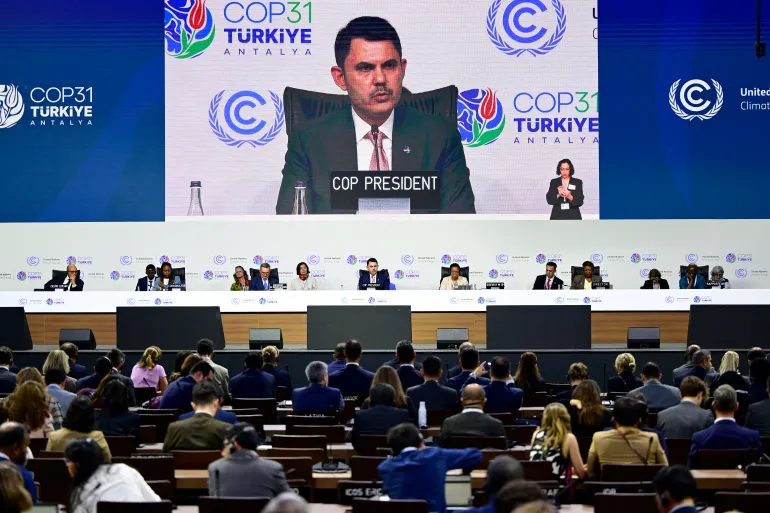
ANTALYA, Turkey — The annual United Nations climate summit collapsed on Sunday, November 22, 2026, after more than two weeks of contentious negotiations failed to produce a consensus agreement on moving away from fossil fuels.
The breakdown at COP31—which stretched nearly two days past its scheduled Friday conclusion to become the longest UN climate conference in history—marks the first major multilateral failure at the talks since the Copenhagen summit in 2009.
Negotiations unraveled during a tense closing plenary session when a coalition led by the European Union, Britain, Panama, and small island states—including the Marshall Islands and Vanuatu—rejected a fourth and final draft decision put forward by the summit presidency. While an earlier draft had included language on phasing out fossil fuels, subsequent revisions stripped out all mentions of coal, oil, and gas following intense resistance from Saudi Arabia, Russia, and other major oil-producing nations.
"We will not endorse a cover decision... that does not even mention fossil fuels, which is the key driver of climate change," said Ireland's Climate and Energy Minister Darragh O'Brien, speaking on behalf of the EU. O'Brien accused oil-exporting states of "hijacking" the talks, adding that the proposed text went "nowhere near the level of ambition needed to tackle climate change".
COP31 President Murat Kurum, Turkey's environment minister, formally announced that the draft cover text had not been adopted and that no further revisions would be issued, effectively suspending the talks until next year.
Instead of a direct commitment to transition away from fossil fuels—which nearly 200 countries had originally pledged at COP28 in 2023—the rejected Antalya text focused on a voluntary target to increase electricity's share of global energy demand to 35% by 2035, without mandating that the power come from renewable sources, while including controversial provisions for carbon capture and storage.
Australia's Climate Change and Energy Minister Chris Bowen, who helped lead the negotiations alongside Turkey, called the collapse "deeply disappointing," pointing to unresolved deadlocks over both fossil fuel language and climate finance for developing nations. The talks were also overshadowed by the absence of the United States, which sent no official delegation for the second consecutive year following its withdrawal from the 2015 Paris Agreement.