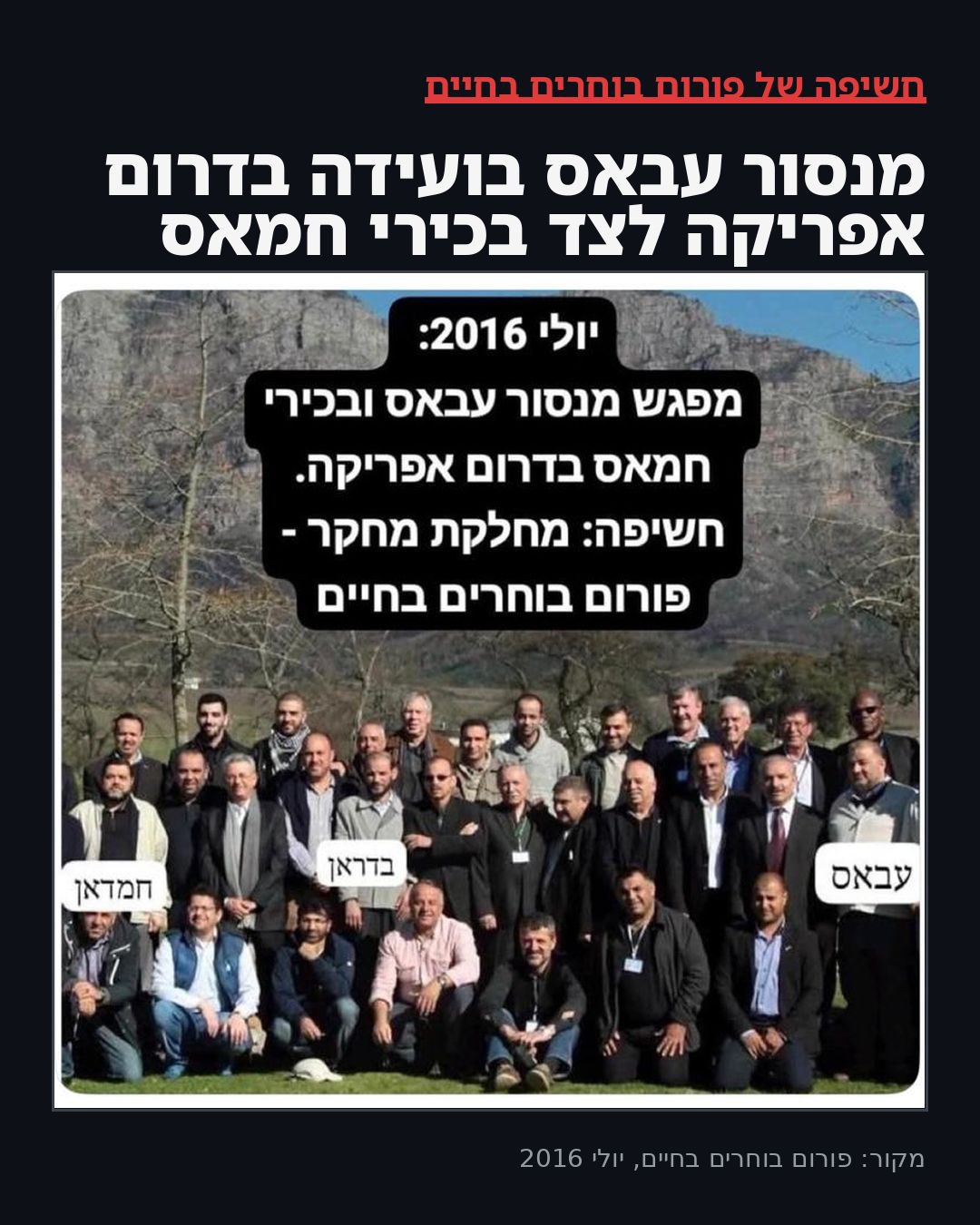
JERUSALEM — Israeli Prime Minister Benjamin Netanyahu has escalated his campaign against the inclusion of Arab parties in Israel’s next government, sharing an archival graphic on Sunday, November 22, 2026, alleging that United Arab List (Ra’am) leader Mansour Abbas appeared alongside senior Hamas figures at a 2016 conference in South Africa.

"They want to form a government with Mansour Abbas? This must not be allowed to happen!" Netanyahu wrote on X (formerly Twitter) alongside a Hebrew graphic credited to the right-wing advocacy group "Choose Life Forum" (Forum Bocharim BaChayim). The graphic displays a July 2016 group photograph with labels identifying Abbas alongside individuals named as Hamas officials Hamdan and Badran.
Deadlocked Coalition Negotiations
Netanyahu’s post comes at a pivotal moment in Israeli coalition talks following the October 27, 2026 legislative election, which left neither major bloc with a 61-seat parliamentary majority:
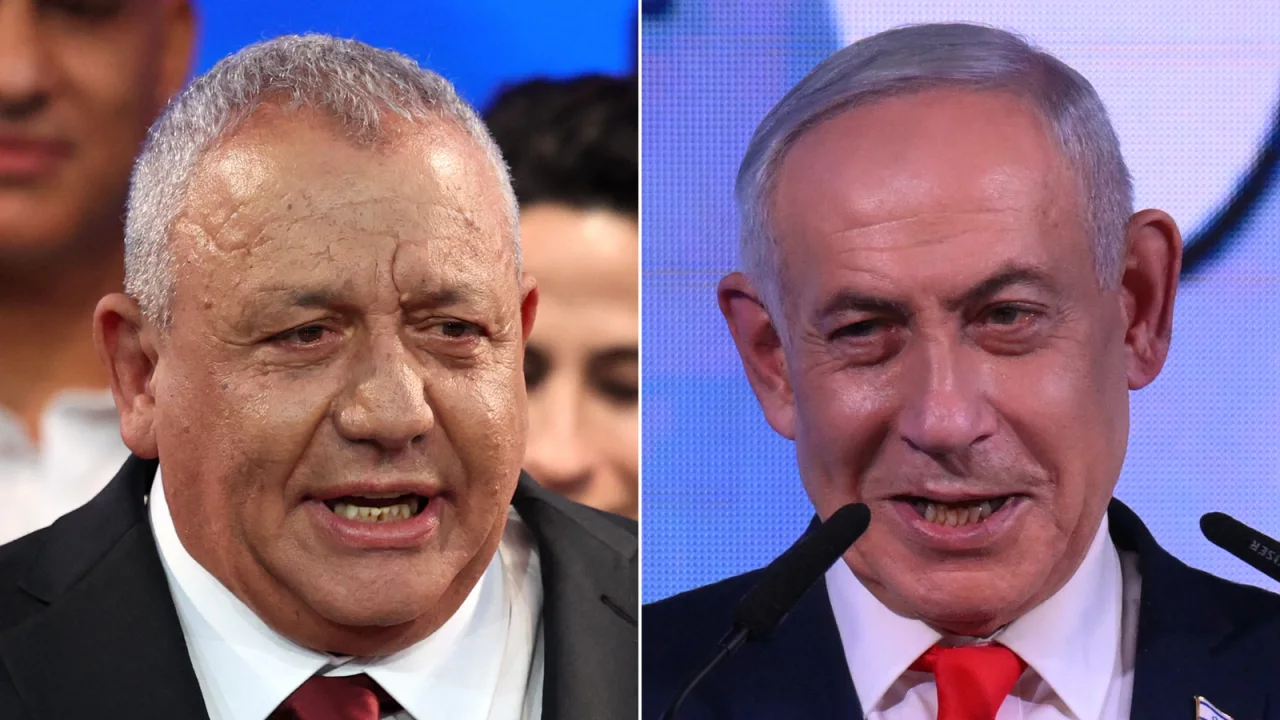
- Eisenkot’s Mandate: Former military chief Gadi Eisenkot—whose Yashar! party leads a 48-seat anti-Netanyahu bloc—was tasked by President Isaac Herzog on November 8 with forming a government by December 6.
- The Arab Parties' Role: Arab-majority parties won a record 19 seats in the 120-member Knesset—11 for the Joint List and 8 for Abbas’s Ra’am party—making their support or external backing mathematically decisive if Eisenkot seeks to build a coalition without Netanyahu’s Likud.
- Unity Government Talks: On Sunday afternoon, negotiating teams from Eisenkot’s Yashar! party and Netanyahu’s Likud held a second round of talks in Herzliya to explore a potential national unity government. Likud has conditioned any unity deal on excluding Arab parties from the coalition and maintaining Netanyahu’s core policies.
Political Clash Over Abbas and Hamas
Netanyahu and his allies have repeatedly sought to delegitimize any government reliant on Ra’am or the Joint List, accusing Arab lawmakers of supporting terrorism. Eisenkot has previously condemned Netanyahu’s rhetoric against Israel’s Arab citizens as "a profound violation of the principles of statesmanship".
Meanwhile, Abbas has faced intense pressure during coalition negotiations from members of Eisenkot’s bloc to explicitly designate Hamas as a terrorist organization. While Abbas has historically resisted the formal label—citing concerns over his family's safety—he has repeatedly stated that Ra’am "rejects and condemns all forms of terrorism," supports the disarmament of Hamas, and views participation in Israel’s government as a "fundamental civil right". Earlier this month, Abbas also accused Netanyahu of hypocrisy, stating that during private coalition talks at the prime minister's residence in 2021, Netanyahu boasted of having an "understanding" with former Hamas leader Yahya Sinwar.