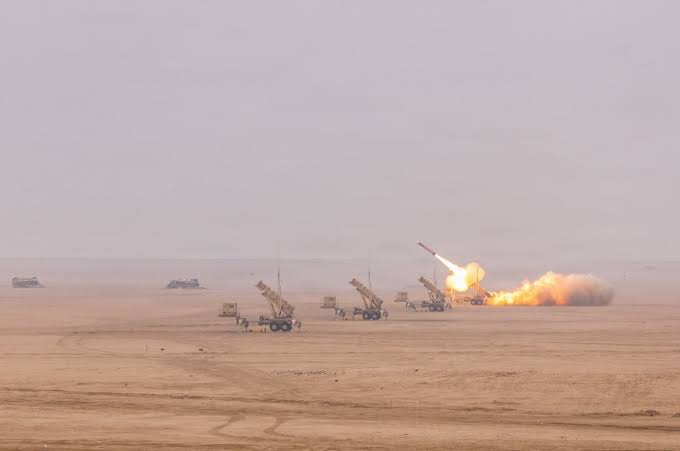
Residents across Riyadh were awakened by emergency hostile-threat alerts sent to mobile phones, followed moments later by loud explosions and bright streaks lighting up the pre-dawn sky as interceptor batteries engaged the incoming projectiles. Saudi authorities have not immediately reported any casualties or structural damage from falling debris following Saturday’s interceptions.
The dawn barrage underscores a sharp widening of the regional conflict, coming just two days after a separate Houthi strike damaged a prominent skyscraper in Riyadh's King Abdullah Financial District.

Retaliatory Strikes and Aerial Warnings
Saturday's missile launches follow heavy coalition airstrikes against Houthi positions in Yemen's strategic Red Sea port city of Hodeidah on Friday. Coalition commanders stated the raids targeted ballistic missile storage facilities and drone launch infrastructure used to threaten regional shipping lanes and Saudi territory.
In response, Houthi military spokespeople issued an urgent warning advising international commercial airlines to avoid Saudi airspace, pledging further retaliatory strikes against critical infrastructure, including ports and power stations.
Strait of Hormuz Flashpoint
The cross-border missile exchanges coincide with heightened naval friction in the Persian Gulf. Alongside Saturday's interceptions over Riyadh, Iran’s Islamic Revolutionary Guard Corps (IRGC) claimed its forces shot down a U.S. MQ-9 reconnaissance drone operating over the Strait of Hormuz. [1]
With emergency civil defense alerts triggered in Riyadh for three consecutive nights, regional security analysts warn that coordinated pressure from Iran and its allied Houthi forces is testing Gulf air defense networks and threatening vital global energy corridors