RUDNINKAI, Lithuania — Germany’s military conducted its first tactical field tests of kamikaze drones on Sunday, November 22, 2026, during large-scale exercises in Lithuania, marking a major milestone in Berlin’s rapid defense modernization on NATO’s eastern flank.
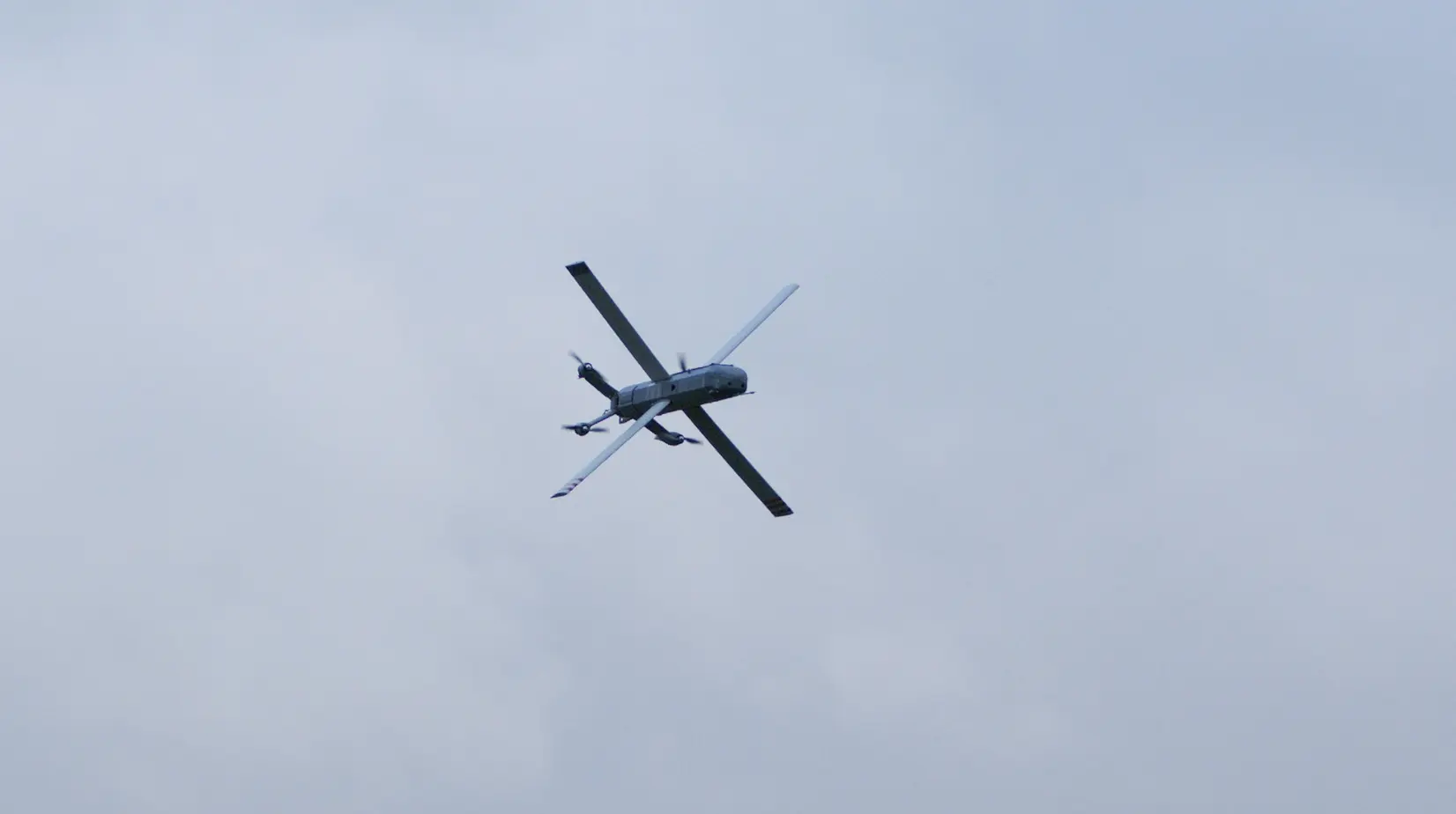
At the Rudninkai training ground near the Belarusian border, German Army Chief Lieutenant General Christian Freuding observed loitering munitions—single-use exploding drones capable of hovering over a battlefield before diving onto targets—strike main battle tanks using inert training warheads. The drones were manufactured by German defense firms Helsing and Stark, whose HX-2 and Virtus systems were approved for procurement by Germany’s parliament earlier this year.
The trials formed part of Freedom Shield, the largest German military exercise ever held in Lithuania. Days earlier, troops at the same training ground ran their first operational tests of Clarity, an artificial intelligence targeting platform developed by Helsing that sifts through vast streams of satellite, drone, and sensor data faster than human analysts to identify threats and recommend strikes.
Lieutenant General Freuding, who previously oversaw Berlin’s weapons deliveries to Ukraine and is set to become Germany’s Chief of Defence in February 2027, described both loitering munitions and AI-driven targeting tools as indispensable for modern warfare.

The deployment signals a profound shift in German defense policy. For years, political controversy and ethical debates over armed and autonomous drones stalled Bundeswehr procurement of loitering munitions—weapons widely used by both Russian and Ukrainian forces throughout the war in Ukraine. Following Russia’s invasion and a multi-hundred-billion-euro surge in German defense spending, Berlin approved initial contracts worth roughly €270 million each with Helsing and Stark in February 2026 to rapidly equip frontline units.
The systems tested at Rudninkai are slated to equip Panzerbrigade 45, a newly formed German armored brigade based in Rudninkai and Rukla that represents Berlin’s first permanent foreign combat deployment since World War II. Around 1,800 German soldiers are already stationed in Lithuania, with the brigade expected to reach full operational strength of 5,000 troops and 2,000 vehicles—including dozens of tanks—by the end of 2027.

NATO officials have repeatedly warned that Russia could pose a direct military threat to allied territory before the end of the decade, prompting intensified deterrence efforts along the Baltic borders with Russia’s Kaliningrad exclave and Belarus. Moscow has denied harboring aggressive intentions toward NATO, accusing the alliance of escalating regional tensions through military buildups near its borders.