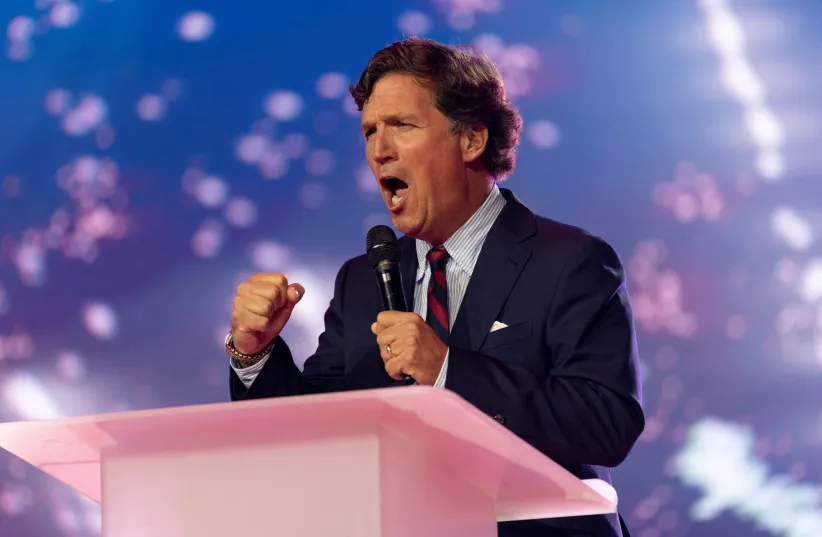
In a post on X on Sunday, Dermer claimed that Carlson pulls in an estimated $23.5 million a year from the foreign amplification of his content. Dermer argued that bad actors no longer need to wire money directly to pundits to shape American political discourse—they can simply manipulate social media algorithms instead.
By paying overseas click farms or bot networks to boost views and subscriptions on platforms like YouTube, foreign interests can push specific videos into American feeds while indirectly funding the creator through platform ad payouts, Dermer explained in recent remarks accompanying the claim.
"Antisemitism has become his revenue model and his listeners are falling for it," Dermer wrote on X, calling Carlson’s audience "Tucker’s Suckers."
Dermer did not publish the analytics behind his $23.5 million estimate, prompting immediate pushback from media critics and commentators. Journalist Glenn Greenwald questioned how a former foreign diplomat would obtain reliable financial data on a private U.S. media company.
The dispute highlights a growing debate over how independent podcasters and digital commentators monetize global audiences—and how easily viral metrics can be skewed across borders.
Carlson, who has not yet commented on Dermer’s post, has long maintained that his independent network is free from outside financial influence. In a July appearance with Stephen A. Smith, Carlson flatly denied taking money from Doha or any other foreign government, stating that he co-owns his media venture solely with his former college roommate.