THE HAGUE — In a landmark ruling that reshapes modern international law, the United Nations’ highest court declared on Thursday that Myanmar committed genocide against its mostly Muslim Rohingya minority during a brutal 2017 military crackdown.
The verdict from the International Court of Justice (ICJ) marks the first time in its 80-year history that the World Court has found a sovereign state legally responsible for committing genocide. It is only the fourth time since the Nazi Holocaust that any international tribunal has ruled that the crime of genocide was committed.
Delivering a three-hour readout of the judgment in The Hague, ICJ President Yuji Iwasawa announced that a 9-to-6 majority of the 15-judge panel ruled Myanmar acted with explicit "genocidal intent" to destroy a substantial part of the Rohingya population in northern Rakhine State.

Judge Yuji Iwasawa, the president of the International Court of Justice (ICJ), attends the reading of the judgement in the case of The Gambia. vs. Myanmar on Nov. 19, 2026.
Dismantling Myanmar’s Counterterrorism Defense
The case, originally filed in 2019 by the West African nation of The Gambia on behalf of the Organisation of Islamic Cooperation, centered on so-called "clearance operations" launched by Myanmar's military in August 2017
During seven years of legal proceedings, Myanmar’s representatives argued that its security forces were conducting legitimate counterinsurgency operations in response to deadly attacks on police posts by the Arakan Rohingya Salvation Army (ARSA).
The World Court flatly rejected that defense, finding that Myanmar’s forces made no distinction between armed militants and civilians. According to the court's findings:
- Scale of Atrocities: Evidence established that Myanmar security forces violently killed at least 10,000 Rohingya civilians and targeted roughly 815,000 people in total.
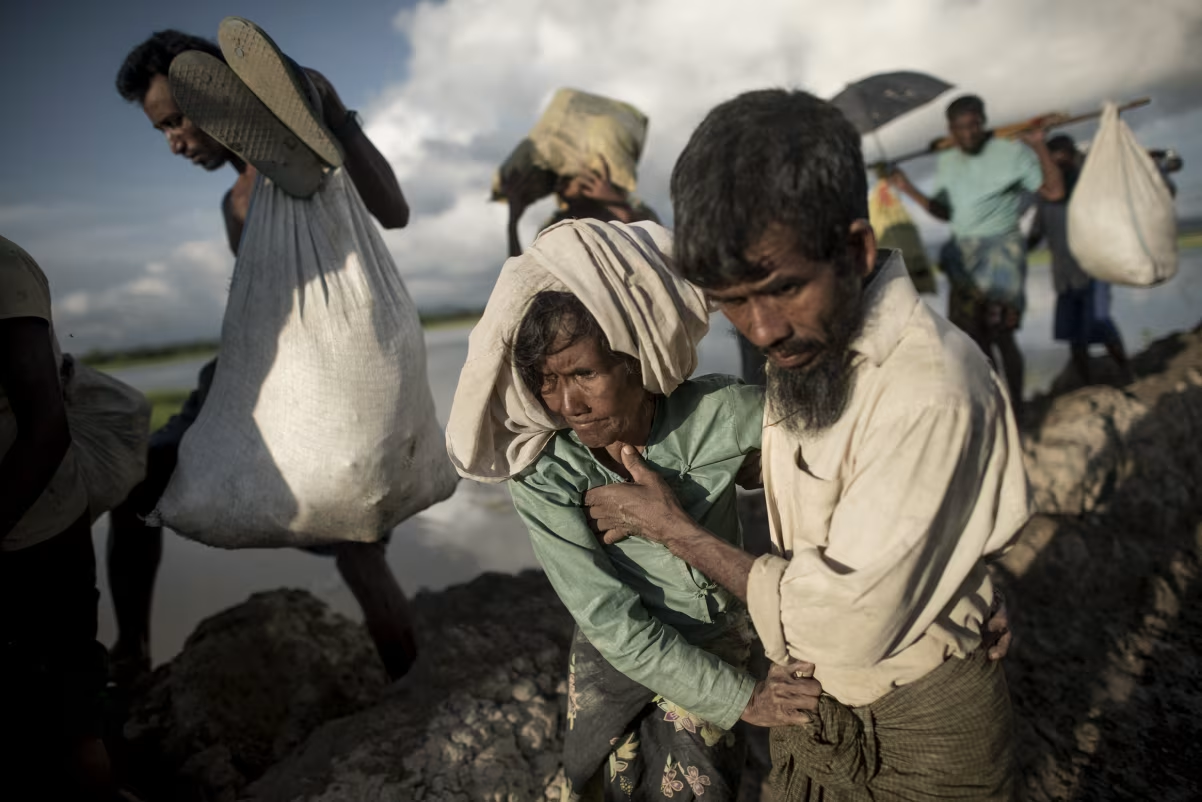
- Systematic Brutality: Judges highlighted widespread acts of sexual violence, extreme violence against children, the deliberate burning and bulldozing of entire villages, and direct attacks on fleeing civilians.
- Cover-Up Operations: The court noted that Myanmar engaged in the "extensive destruction of evidence" by burning or disposing of bodies and failing to prosecute perpetrators.Legal Classification and Court OrdersBeyond the primary genocide ruling, the ICJ ruled by overwhelming majorities that Myanmar violated multiple articles of the 1948 Genocide Convention by failing to prevent the atrocities and failing to punish those responsible.Crucially, the court also formally recognized the Rohingya as a distinct protected ethnic group under international law—a designation long denied by Myanmar authorities, who refer to the population as illegal "Bengali" immigrants.As part of the legally binding judgment, the court ordered Myanmar to:
- Cease Violations and Prosecute: Enact domestic legislation enforcing the Genocide Convention and take immediate steps to investigate and prosecute all individuals suspected of committing genocidal acts.
- Ensure Safe Return: Adopt measures of restitution allowing the more than 730,000 Rohingya refugees currently living in sprawling camps in neighboring Bangladesh to return safely, voluntarily, and with dignity.
- Pay Reparations: Provide formal compensation to the Rohingya community for the physical and material destruction inflicted upon them.
- Global Impact and Enforcement HurdlesIn the Cox’s Bazar refugee camps in Bangladesh, crowds of Rohingya survivors gathered around outdoor screens cheered and wept as the verdict was broadcast. United Nations Secretary-General António Guterres hailed the judgment as a "powerful recognition of the Rohingya victims" and a vital demonstration that impunity for mass atrocities will not stand.While ICJ rulings are final and legally binding, the court possesses no independent police force to enforce its mandates. If Myanmar’s military junta refuses to comply with the reparations and repatriation orders, the matter can be referred to the UN Security Council—where geopolitical deadlocks frequently stall punitive action.Nevertheless, legal analysts note that the historic precedent will reverberate far beyond Southeast Asia, establishing a critical judicial benchmark as the World Court weighs ongoing genocide cases linked to the wars in Gaza and Ukraine.