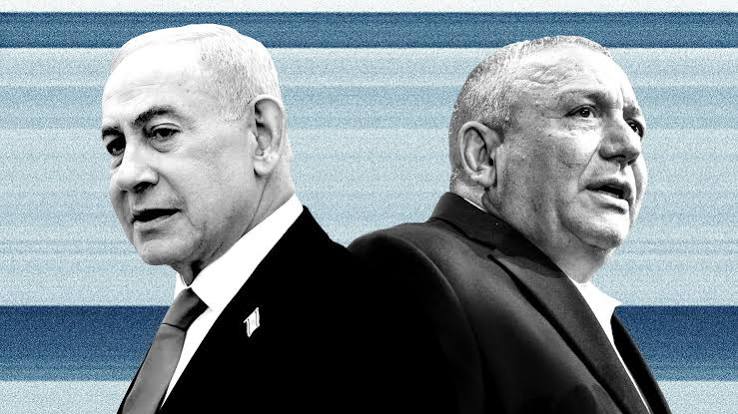
Election Outcome and the Mandate
The election produced no outright majority. Netanyahu’s right-wing and religious bloc secured 53 seats in the 120-seat Knesset. The anti-Netanyahu grouping aligned with Eisenkot’s Yashar party and partners (including B’Yachad, Yisrael Beiteinu, and the Democrats) won 48 seats. The two Arab-led parties (Joint List and Ra’am) achieved a record combined 19 seats. Likud remained the largest single party with 27 seats; Yashar took 21.Globes
President Isaac Herzog, after consultations, tasked Eisenkot on November 8 with forming a government. Parties representing 67 lawmakers recommended him, compared with 46 for Netanyahu. Eisenkot has an initial 28 days (until roughly December 6), with a possible 14-day extension to December 20. If he fails, the mandate can pass to another candidate—most likely Netanyahu—or the country could head toward another election.
Positions of the Two Leaders
Netanyahu has repeatedly called for a national unity government that would include parties recognizing Israel as the nation-state of the Jewish people. He has framed it as essential for confronting security challenges, particularly from Iran, and has urged talks “without preconditions.” He has warned against what he describes as a weak or “shaky” alternative government.Al-monitor
Eisenkot has rejected these appeals as political “tricks” or a “spin,” stating that Netanyahu knows he lost the election and that negotiations between their teams were already underway. He has insisted on a “national emergency government” under his leadership and has outlined four core principles that potential partners must accept:
- Recognition of Israel as a Jewish and democratic state.
- Commitment to the values of the Declaration of Independence.
- Mandatory military, national, or civilian service for all citizens.
- Recognition of Hamas as a terrorist organization and a commitment to dismantling its military and governing capabilities.Jta
Eisenkot has left the door open to individual members of Likud or even Religious Zionism if they accept these principles and support a government he leads (without a premiership rotation involving Netanyahu). He has also pursued outreach to ultra-Orthodox parties while facing internal resistance within his own bloc to a pure minority government reliant on Arab parties’ external support.
Coalition Challenges and Parallel Moves
Forming a stable government is difficult. A minority government of the 48-seat anti-Netanyahu bloc would require external backing (potentially from Arab parties or abstentions). Bringing in the ultra-Orthodox parties (United Torah Judaism and Shas) could reach a majority but raises hard questions over conscription exemptions—a major campaign issue. Eisenkot’s bloc has also moved to assert control in the Knesset, including efforts related to the speaker position and potential review of prior legislation.
Recent Allegations
On November 15, Channel 12’s investigative program Uvda reported that Netanyahu’s chief of staff and a former Prime Minister’s Office employee connected to earlier staff allegedly directed police to intelligence that led to the arrest of Ra’am activists on election morning. The information is said to have proved baseless; authorities are examining whether it was planted to support claims of Arab electoral interference. The Prime Minister’s Office has denied the characterization, stating that the chief of staff simply passed along criminal information as any citizen should and rejecting further claims as false and potentially libelous. Eisenkot responded by calling the reported conduct a direct threat to Israeli democracy and demanding immediate investigations by police, the Shin Bet, and a commission of inquiry.Jpost
Outlook
The coming weeks will test whether Eisenkot can assemble a functioning coalition before the mandate expires, whether Netanyahu can force a different outcome, and how the new allegations and ongoing security briefings affect public and political calculations. A unity arrangement under Eisenkot’s terms, a minority government, Haredi inclusion, or a return to the voters all remain possible. The caretaker period continues in the meantime, with both leaders emphasizing security needs while contesting the legitimacy and path of the transition.
This situation reflects the fragmented Knesset produced by the October vote and the deep divisions over governance, conscription, and the role of Arab parties. Developments are fluid and will likely shift with each round of talks and any formal investigative steps.