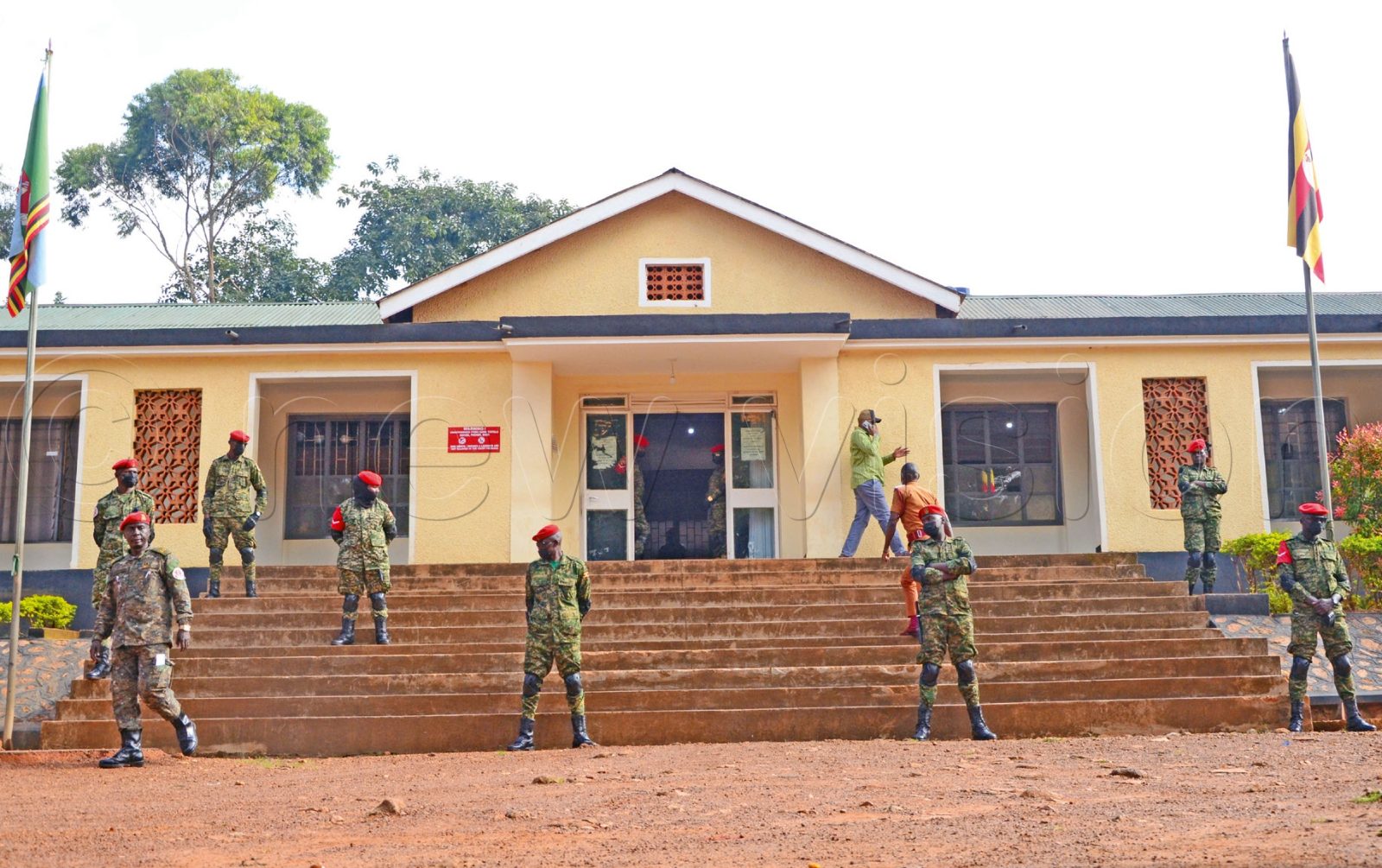

Supported physically by soldiers because he was unable to walk unaided, a severely emaciated Mugumya was paraded into the General Court Martial in Kampala. The military tribunal promptly charged him with treachery and security-related offenses, before remanding him to Murchison Bay Prison in the notorious Luzira maximum-security complex.
The sudden reappearance of the high-profile member of the People's Front for Freedom (PFF) exposes the grim realities of Uganda’s parallel, military-run justice system. It highlights a pattern of secretive detentions that human rights organizations say is being used to systematically dismantle political opposition to President Yoweri Museveni's 40-year regime.
From Enforced Disappearance to the Dock
Mugumya’s ordeal began on August 26, 2025, when plainclothes security operatives and uniformed military personnel raided a hotel in the western city of Mbarara while he was eating breakfast. Witnesses watched as he was bundled into an unmarked "drone" passenger van—the vehicles that have become a terrifying symbol of state abductions in Uganda.
For over a year, his fate remained entirely unknown. In response to legal habeas corpus demands, the Uganda People’s Defence Forces (UPDF) went as far as filing formal court affidavits stating unequivocally that a search of all military installations showed no record of Mugumya.
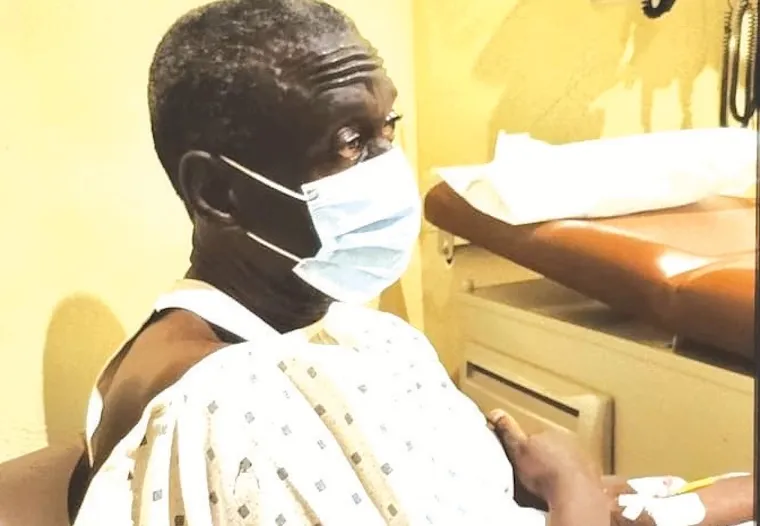
The state's narrative began fracturing in October 2026, when leaked videos circulated on social media showing a frail, physically broken man resembling Mugumya inside a fenced compound. Army officials aggressively dismissed the footage as "doctored images" and "substantiated forgeries."
Yet, when Mugumya entered the military dock on Wednesday alongside two co-accused UPDF soldiers, the physical toll of his unacknowledged, year-long confinement was undeniable. Eyewitnesses in the courtroom reported that he appeared profoundly weak, matching the description of the leaked videos that the military had spent weeks discrediting.
Th e Weaponization of Military Law
Mugumya was jointly charged with treachery alongside two lower-ranking soldiers, Lance Corporal Gift Mukundane and Lance Corporal Isaac Ochom. All three pleaded not guilty. While the soldiers were sent to a military police barracks, Mugumya was sent to Luzira, with the prosecution noting that state investigations are still ongoing.
Legal analysts and international human rights advocates point out that trying civilians in a military court-martial is a severe violation of international treaties to which Uganda is a signatory.
The strategy serves a deliberate political purpose. By bypassing civilian judiciaries, the state can hold political targets indefinitely without bail, bypass constitutional protections, and shield intelligence agencies from cross-examination regarding torture and illegal detention facilities—commonly referred to in Uganda as "safe houses."
Affidavits previously submitted by former detainees back up these concerns, with one witness swearing under oath that he saw an ailing Mugumya being held in an underground facility managed by the elite Special Forces Command (SFC)—the presidential guard unit controlled by the President's son, General Muhoozi Kainerugaba.
A Global Pattern of Repression
For international observers, Mugumya’s sudden court presentation is part of an escalating domestic assault against dissent. Just weeks prior, the Chief of Defence Forces, General Muhoozi, used his personal social media platform to explicitly warn that independent tech analysts and opposition figures would face swift ten-year prison terms through the General Court Martial.
The international community, including Western diplomats who historically funded Uganda's security sector as a regional counterterrorism partner, faces growing pressure to act. Local rights networks warn that if the use of secret detentions, enforced disappearances, and physical torture continues unchecked, the country risks sliding into unchecked authoritarianism during its highly volatile presidential transition.
Mugumya, who previously survived an eight-year detention without trial in the neighboring Democratic Republic of Congo before returning to Uganda in 2022, now faces the fight of his life inside his own country’s capital. He remains isolated behind the walls of Luzira until his next scheduled court appearance on December 21. For a population watching the heavy-handed mechanics of state power play out in real time, his appearance is a stark reminder that in modern Uganda, the line between state security and state terror has completely dissolved.