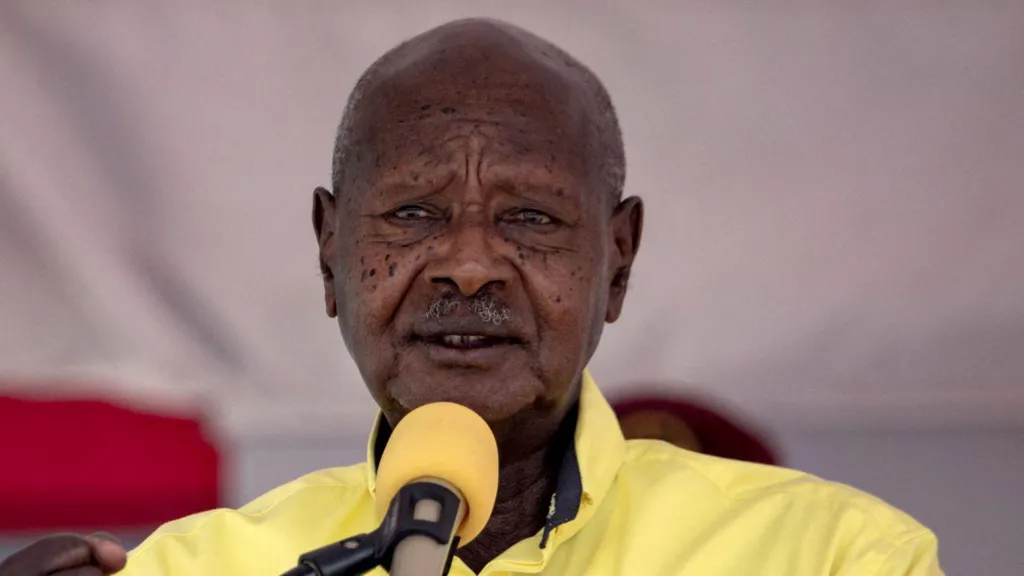
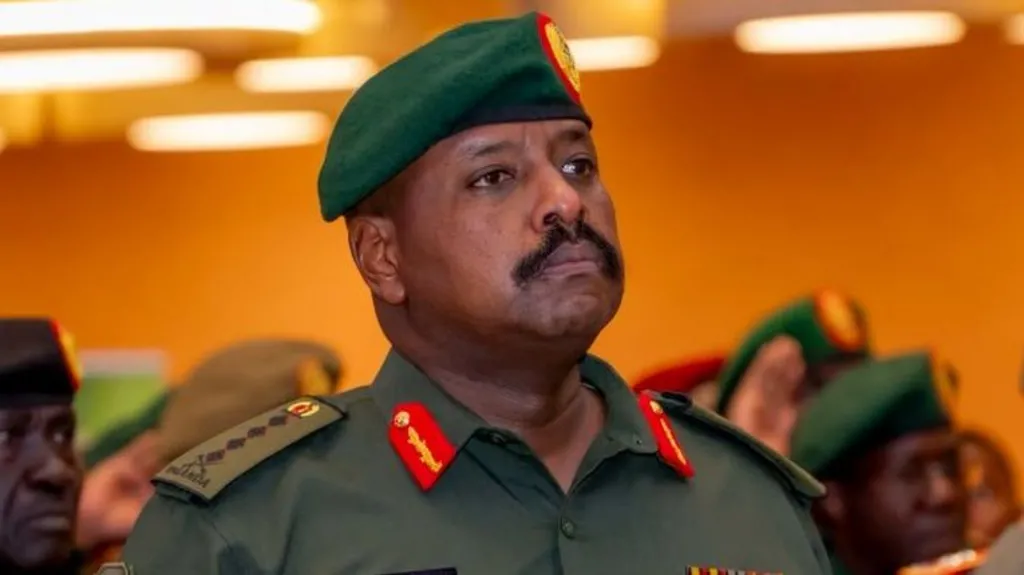
Muhoozi is no ordinary officer. He is the Chief of Defence Forces, the top commander of Uganda’s military, and the eldest son of President Yoweri Museveni. Within a few short paragraphs, he single-handedly upended the country's security architecture, bypassed standard judicial channels, and decreed immediate military court-martial trials for top-ranking generals, independent tech analysts, and political dissidents.
As his 82-year-old father enters his fourth decade of continuous rule, Muhoozi’s digital blitz signals a sharp, unpredictable turn in Uganda's transition of power. It reveals a chilling political reality: formal institutional protocol is increasingly being replaced by the raw, unvetted whims of a first son who seeks to rule a nation by digital decree.

The Net Catches the Critics
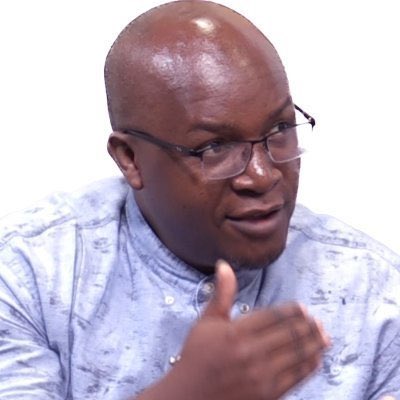
The most immediate target of Muhoozi's digital crackdown is the independent media and the technical minds who refuse to toe the ruling party's line. In one post, Muhoozi explicitly stated that civilian tech analysts working with outside entities would face swift military justice, specifically naming a recently detained cybersecurity expert, Egesa.
"For foreign agents, agents of foreign media they shall be tried by the Court Martial. Like Egesa," Muhoozi announced, later warning that ten-year prison terms would start with him and quickly expand to others.
The threat carries a dark irony given the real-world events preceding it. Egesa went missing on November 13, 2026, snatched by armed men in plain clothes from a radio station parking lot in the heart of Kampala. While police later admitted they had him in custody, they refused to reveal where or under what charges he was being held, triggering immediate panic among local legal defense groups.
Muhoozi’s warnings also extended a cold hand toward the broader press, threatening a decade behind bars for any media platform that "insults or belittles" the first family. This follows a long-standing pattern of state intimidation against the press, including the previous forced closures and regulatory harassment of prominent independent outlets like NTV Uganda and the Daily Monitor newspaper.
Dismantling Civilian Authority
To understand how a four-star general can order arrests via social media, one must look at how Muhoozi has systematically dismantled the authority of Uganda’s civilian government. The formal constitutional hierarchy of the country means very little when compared to the bloodline of the First Family.
This became painfully clear during a series of late-night digital tirades where Muhoozi openly attacked the country’s highest civilian leaders, including Vice President Jessica Alupo and Prime Minister Robinah Nabbanja. Dismissing them as corrupt, arrogant, and ineffective, Muhoozi publicly warned them that the military would step in and take over their executive duties if they failed to fall in line. By reducing the official number-two executive of the state to a target of internet ridicule, Muhoozi sent a clear message to the entire political establishment: no one is safe, and no civilian office is respected.
The fear surrounding these court-martial decrees is deeply rooted in how critics are dealt with behind closed doors. The most haunting example remains that of Kakwenza Rukirabashaija, an internationally acclaimed, award-winning Ugandan novelist. In late 2021, Kakwenza used his social media platform to mock the First Son, calling him intellectually hollow and a curse upon the country's future.
Days later, heavily armed commandos smashed through Kakwenza’s door and dragged him into secrecy. He was held for weeks by the Special Forces Command—the elite presidential guard unit that Muhoozi built and commanded for years. When Kakwenza was finally released on bail, he fled into exile and showed the world the horrific physical toll of his detention, detailing how security operatives used pliers to tear strips of flesh from his body on direct orders from the First Family.
Rage, Regret, and the Military Sandbox
The chaotic, highly personalized nature of Muhoozi's command style was on full display in his latest updates regarding retired Lt. Gen. Peter Elwelu, the former Deputy Chief of Defence Forces. In late October, Muhoozi had used his account to declare Elwelu a traitor, stripping him of his three-star rank and ordering a military hunt that ended in Elwelu’s arrest in the eastern Soroti district.
But in a stunning turn of events on Tuesday morning, Muhoozi casually admitted that the entire demotion had been carried out purely out of personal anger, walkbacking the decision just as abruptly as he had made it.
"I was very, very angry with Elweru some weeks ago," Muhoozi wrote. "I demoted him to a private. I was ready to do much worse. I now restore his rank as a Lt. General of our great army. He will face the Court Martial with his restored rank."
To legal scholars and veteran army officers, this back-and-forth theater is deeply alarming. Under the UPDF Act and standard military law, a commanding officer cannot strip a commissioned general of his rank via an internet post without a formal trial and presidential sign-off. The sudden reversal exposes a military justice system being used as a personal sandbox to humiliate and break old-guard, bush-war era generals who oppose Muhoozi's path to the presidency.
Slamming the Door on Compromise
As he purged the military ranks, Muhoozi also moved to crush any hope of a peaceful political compromise with the country’s traditional opposition. For weeks, rumors circulated of quiet, behind-the-scenes power-sharing negotiations led by Muhoozi’s uncle, the influential General Salim Saleh, aimed at easing the political crisis surrounding jailed opposition icon Dr. Kizza Besigye.
Muhoozi used his morning address to publicly tear up those negotiations, demanding that his father immediately end the talks and return Besigye to maximum security.
"I am going to request Mzee [President Museveni] that we take Besigye back to Luzira," Muhoozi asserted. "Afande Saleh has tried his best with that criminal. We should put him back in his cell and try him."
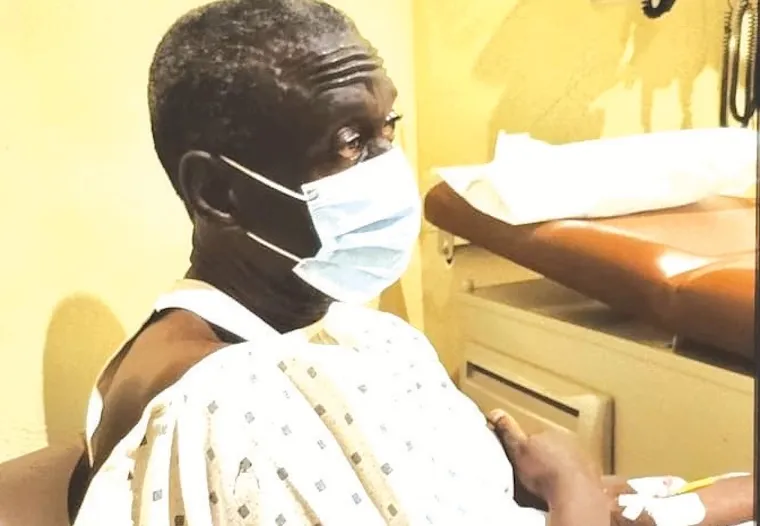
Almost simultaneously, Besigye’s political party and his wife, international diplomat Winnie Byanyima, rejected the regime’s overtures, calling them an attempt to legitimize a dynastic succession plan. Byanyima has issued urgent appeals to the international community, warning that Besigye’s health is failing rapidly under the harsh conditions of his confinement—conditions designed to break his resolve before the next election cycle.
A Ticking Clock for the West
This volatile mix of state power and digital outbursts has previously leaked across Uganda’s borders, causing severe regional instability. Most famously, Muhoozi sparked a massive diplomatic crisis when he tweeted that it would take him and his personal army less than two weeks to capture Nairobi, the capital of neighboring Kenya. The threat forced President Museveni to issue a humiliating public apology to the Kenyan government and temporarily remove his son from command—only to promote him to a full four-star general a short time later.
For international policymakers, Tuesday’s stream of consciousness paints a picture of a fragile, consolidating autocracy that the West can no longer afford to ignore. For decades, Washington and European capitals treated Museveni as a regional anchor for stability and counterterrorism in East Africa. But by bypassing courts, threatening civilian leaders, and ordering military trials online, General Muhoozi is systematically reshaping the state's security apparatus into a direct extension of absolute family rule.
Beneath the display of absolute power lies a profound vulnerability. Over 75% of Uganda’s population is under the age of 30, and youth unemployment hovers at 43%. The regime is ruling over a generation that has known no other leader than the Museveni family and has zero appetite for a dynastic legacy. As the political clock ticks forward, an aging dictatorship is increasingly forced to rely on raw fear, arbitrary abductions, and midnight court-martials to suppress a modern, restless population demanding real institutional change. The question for the international community is no longer if Uganda will destabilize, but when.